


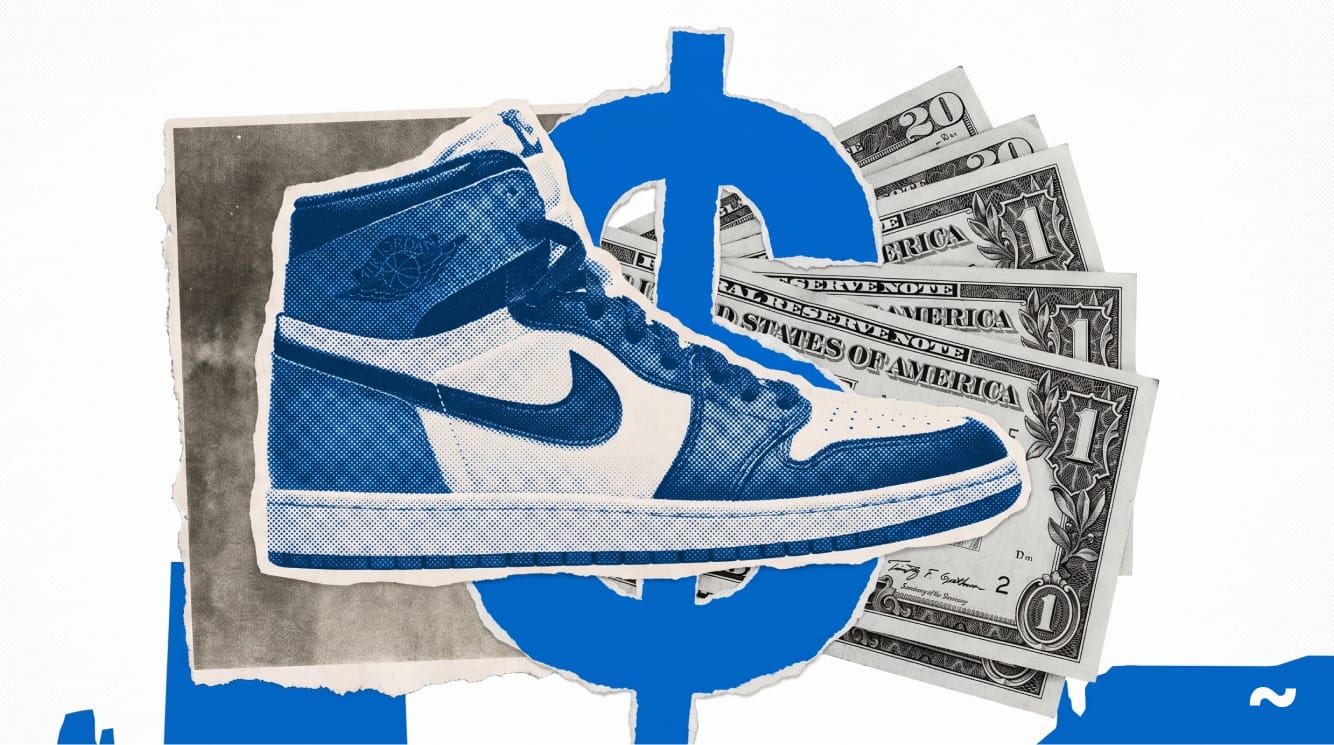
The air inside the Beaverton corporate archive felt dead and I finally open the 1984 marketing budget drafts. We are endlessly spoon-fed a glossy, retroactive mythology that portrays the explosive launch of the Air Jordan line as a stroke of inevitable corporate genius, a flawless, cosmic alignment of a generational athlete and a visionary company. But staring at the raw, carbon-copied budget reallocation requests, the ink smudged under the harsh fluorescent light, the illusion of visionary planning immediately collapsed. There was no masterstroke. There was only absolute, paralyzing desperation.
By the suffocating summer of 1984, Nike was hemorrhaging forward momentum. The massive, lucrative running boom that had fueled their initial explosion had violently flattened out into a stagnant plateau. They desperately needed to conquer the basketball market to survive the decade, but they were entirely, humiliatingly locked out of the arena. Converse aggressively owned the hardwood, locking down established superstars with ironclad contracts. Meanwhile, Adidas owned the asphalt streets, holding the undisputed, heavyweight title of aspirational cool. The Oregon brand was widely dismissed as a regional track-and-field company producing stiff, unappealing white leather shoes for suburban joggers.
The corporate brass had reluctantly allocated a meager war chest of five hundred thousand dollars to somehow salvage their bleeding basketball division. In the rigid, bureaucratic logic of the boardroom, the strategy was perfectly clear, financially conservative, and entirely sterile. The marketing department was strictly instructed to take that half-million dollars and spread it evenly across three or four solid, reliable rookies from the upcoming draft class. It was a standard, risk-averse portfolio strategy. You hedge your bets, you buy a few decent players, and you pray to the market that one of them makes an All-Star team in a few years.
It was a mathematical formula for a slow, agonizing death. And the only man in the building who realized it was a guy who didn't even officially belong in the boardroom.
The Shadow Operator
Sonny Vaccaro was not a polished corporate executive. He did not possess an Ivy League MBA, and he certainly did not speak the sterilized, bloodless language of market research. He was a grassroots hustler, a shadowy, fast-talking fixer operating squarely on the fringes of the basketball underworld. He was the operative who had effectively invented the dark-money concept of paying college coaches under the table to force their teenage players to wear a specific brand of sneakers.
He operated entirely on feral instinct, backroom relationships, and a ruthless, predatory understanding of leverage. He knew the weaknesses of every high school prodigy and college standout in the country. And when he looked at the 1984 draft class, he saw exactly one asset worth acquiring.
I traced the faded internal memos documenting a critical, sweat-soaked summer meeting between the fixer and Rob Strasser, the towering, aggressive marketing chief of the struggling sportswear empire. The executive was a pirate forced into a tailored corporate suit, a massive man who had built the brand on high-risk, existential gambles but now found himself increasingly suffocated by the company's newfound Wall Street conservatism.
The operative walked into the executive’s office, locked the door, and essentially initiated a hostile hostage negotiation. He looked at the safe, diversified strategy drafted by the terrified corporate accountants and told the marketing chief to throw it in the incinerator.
He demanded they take the entire five hundred thousand dollar budget — every single bleeding cent allocated for the entire basketball division — and dump it blindly onto the shoulders of a single, untested twenty-one-year-old guard out of North Carolina.
Reading the frantic, handwritten notes detailing this pitch, the sheer, breathtaking audacity of the ultimatum sent a cold chill down my spine. In the hyper-conservative, heavily monitored environment of a publicly traded apparel company, suggesting a capital reallocation of this magnitude is professional suicide. If the kid tore his ACL in a meaningless training camp, or simply turned out to be a mediocre, easily rattled professional player, the entire basketball division would immediately, permanently fold. The marketing chief would be fired. The fixer would be exiled. The brand would be locked out of the professional arena forever.
The operative did not care. He cornered the massive executive and delivered the brutal, unforgiving truth: spreading the money out was a guaranteed loss. Buying four average players would not crack the heavy armor of Converse or Adidas. You do not defeat a vastly superior army by cowardly spreading your forces thin.
You defeat them by building a single, unstoppable weapon.
The Hostile Target
The most astonishing detail buried in the dust-choked 1984 files is not that the fixer convinced the executive to bet the entire, billion-dollar company on one rookie. The most astonishing detail is that the rookie actively, intensely despised the company offering the bet.
Michael Jordan had absolutely no interest in wearing Nike. He had spent his entire collegiate career wearing Converse, mandated by the strict, iron-fisted rule of his legendary head coach. But in his private time, and for his impending, highly lucrative professional career, his heart belonged entirely to Germany. He was completely obsessed with Adidas. He loved the sleek aesthetic, he loved the European prestige, and he desperately, stubbornly wanted to sign with them.
The American executives were not just fighting a grueling war against their own conservative, terrified bureaucracy; they were desperately trying to recruit a target who viewed them as a massive, humiliating downgrade.
When the North Carolina prospect eventually flew out to the damp Oregon headquarters — dragged there kicking and screaming by his parents and his slick agent — the presentation was agonizingly tense, bordering on openly hostile. The young athlete barely spoke a word. He stared blankly at the ceiling tiles. He barely even looked at the physical prototype shoes the frantic design team had scrambled through the night to build.
To break through this impenetrable wall of apathy, the marketing chief and his fixer realized they could not pitch standard athletic equipment. They could not simply offer the arrogant kid a lucrative shoe contract. They had to offer him an entire corporate mutiny.
They completely bypassed the rigid, heavily policed brand guidelines dictated by the founder. They promised the bored rookie something no other athlete in the history of professional sports had ever been offered: they would build a standalone, autonomous sub-brand entirely around his identity. He would not be a mere, disposable endorser standing next to the corporate swoosh. He would be the absolute focal point, and the corporate logo would be relegated to the background. They offered him unprecedented creative input, dedicated marketing lines, and, most crucially, a direct, bleeding cut of the actual revenue.
They were not inviting him to join the company. They were offering to let him legally hijack a portion of it.
The Secret Launch Group
The handshake agreement was struck, but the internal, bloody corporate warfare had just begun. Securing the signature of the prodigy was only the first, perilous phase of the operation; the second phase required actually building the weapon in the dark, without alerting the corporate accountants who would inevitably try to dismantle it.
I sifted through the heavily redacted organizational charts from the final, chaotic quarter of 1984. The executive and the fixer effectively walled off a small, highly covert unit within the company, entirely dedicated to the project. They aggressively isolated their lead designers, their copywriters, and their production managers, heavily insulating them from the standard, agonizing, focus-group review processes that had begun to plague the wider, bloated corporation.
They were operating a rogue, heavily armed state within Beaverton. They designed the infamous black and red prototype — a shoe so aggressively, unapologetically violent in its color blocking that it blatantly, deliberately violated the strict uniform rules of the professional league. They drafted television spots that did not focus on the boring technical specifications of the polyurethane foam, but rather on the mythical, gravity-defying, almost supernatural aura of the athlete himself.
The traditional executives at the parent company were absolutely terrified. They watched a massive, critical chunk of their operating budget vanish into a siloed, unaccountable project built around a kid who had yet to score a single professional point. The legal department frantically warned of the impending, massive financial fines from the league commissioner's office. The panicked sales representatives complained that suburban retailers would never, ever stock a basketball shoe that wasn't primarily white.
But the marketing chief and the grassroots operative held the line. They operated with the cold, unyielding, terrifying certainty of men who had already pulled the pin on the grenade. There was no turning back. They had violently forced the corporation to push all of its chips into the center of the table, betting everything on the volatile, untested chemistry between a rebel corporate faction and an arrogant rookie with a grudge against gravity.
The Execution of the Status Quo
When the shoe finally dropped on the retail market, and the athlete took the hardwood floor, the resulting explosion violently rewrote the fundamental rules of global commerce.
The internally projected sales for the entire first four years of the Air Jordan line were a highly optimistic, nervous three million dollars. In the first twelve months alone, the rogue sub-brand generated one hundred and twenty-six million.
It was a financial hemorrhage in reverse. It instantly, brutally obliterated the market share of Converse and entirely, permanently derailed the North American ambitions of Adidas. The shoe ceased to be mere athletic equipment; it became a coveted cultural artifact, a physical, stitched-leather manifestation of defiance and unparalleled excellence.
I closed the final, heavy folder of budget requests, the stark, faded typewritten numbers of the original five hundred thousand dollar allocation staring blankly back at me in the dim light. We desperately want to believe that billion-dollar industries are masterfully engineered by rational actors in glass boardrooms, carefully analyzing clean data to execute flawless strategies. We want to believe that the men at the top of the pyramid possess a divine, infallible foresight. But the archival reality is a brutal, humiliating corrective. The most lucrative marketing arrangement in the history of modern capitalism was not the product of a brilliant corporate mastermind. It was the product of a shadowy fixer who walked into an office, recognized his employers were bleeding out from their own cowardice, and essentially held a loaded gun to their heads. The brand did not conquer the world because they strictly followed a brilliant internal strategy. They conquered the world because a grassroots hustler forced them to abandon their safety net, bypass their own CEO, and bet their absolute survival on a teenager who didn't even want to be in the room. ~
BrandAnatomy operates independently. You can anonymously fund future forensic deep-dives.
Sources
- Halberstam, D. (1999). Playing for Keeps: Michael Jordan and the World He Made. Random House.
- Strasser, J., & Becklund, L. (1991). Swoosh: The Unauthorized Story of Nike and the Men Who Played There. Harcourt Brace Jovanovich.