


The marketing executives want you to believe that technology is a phantom entity, a pure manifestation of thought floating harmlessly in the cloud. They sell you sleek glass, invisible wireless signals, and the idea that failure is simply an iterative step in the grand, frictionless march toward progress.
But if you dig deep enough into the corporate archives, you hit bedrock. You realize that before software ate the world, hardware was a brutally physical, carnal reality.
When a massive corporation makes a catastrophic miscalculation today, they simply turn off a server, quietly deprecate an app, and erase the digital footprints. In the 1980s, you could not delete your arrogance. Mistakes were manufactured in plastic, silicon, and heavy metals. When you built a failure, it sat in a warehouse, weighing fifty pounds, actively bleeding cash from your balance sheet while the financial department panicked.
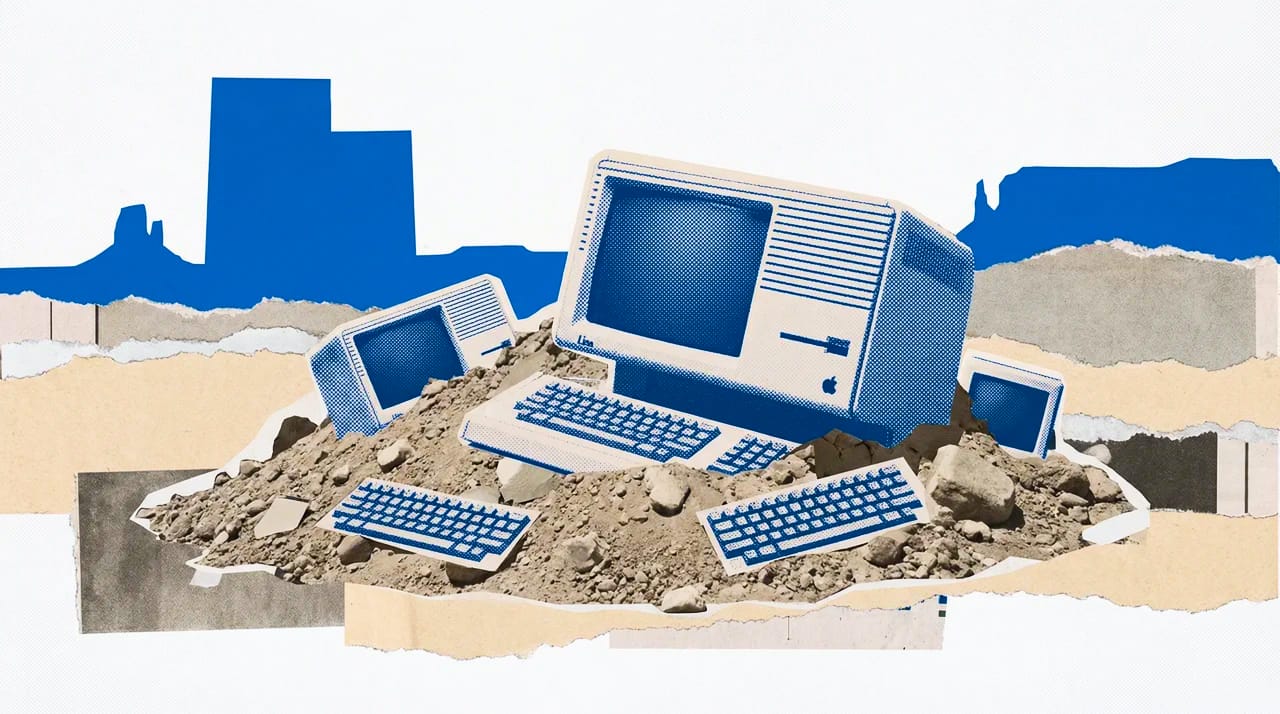
This is the autopsy of the Lisa. It is not a story of visionary design, it is the story of the exact moment Apple realized that its own staggering corporate ego had created a physical monster — a multi-million-dollar liability that was so toxic, the only financially viable solution was to hire a fleet of bulldozers, drive the inventory into the remote desert, and literally bury it in the dirt.
The Ten-Thousand-Dollar Delusion
To understand the sheer scale of the execution in Utah, you have to rewind to 1983 and breathe in the intoxicating, blinding arrogance of Apple at its absolute peak.
The company was flush with cash from the Apple II, a machine that had practically invented the personal computing market. Steve Jobs, vibrating with the manic energy of a founder who believed he could bend reality to his will, had toured the secretive laboratories of Xerox PARC. He had seen the future: a graphical user interface, overlapping windows, and a strange peripheral called a mouse. He returned to Cupertino determined to steal the fire from the gods and package it into a machine that would obliterate IBM.
He named the project Lisa.
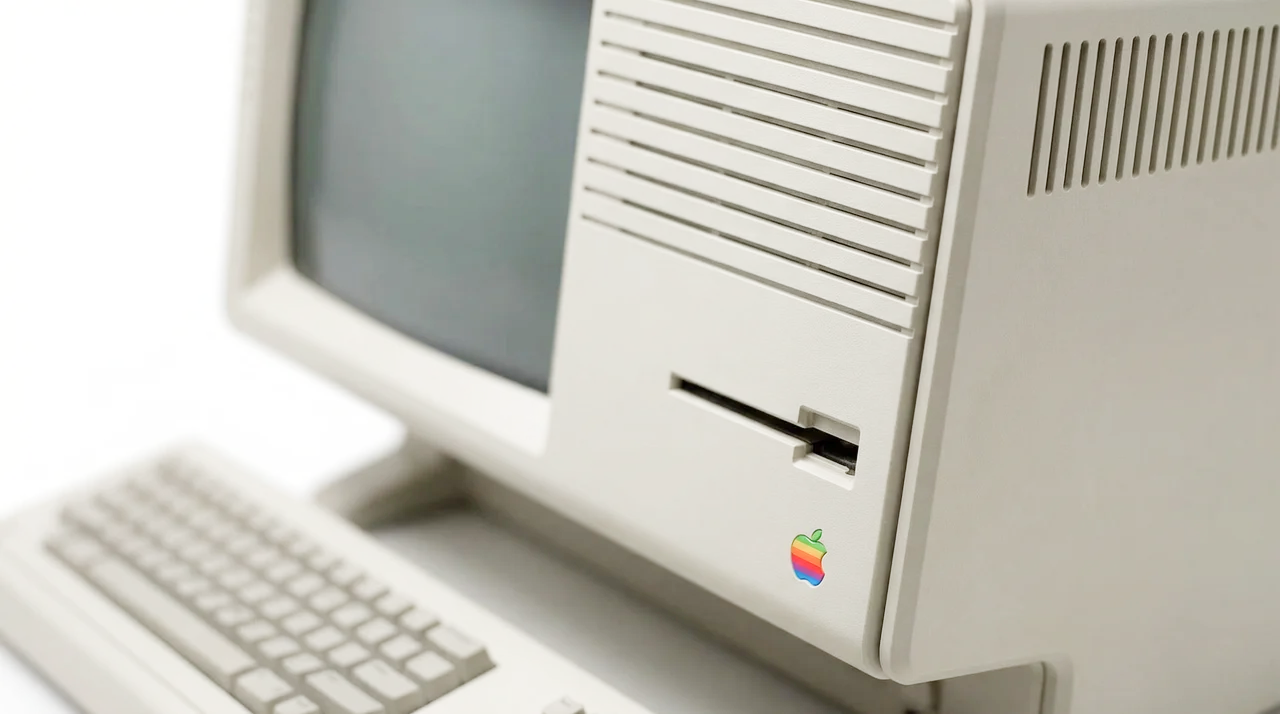
Jobs publicly insisted that the name was an acronym for Local Integrated Software Architecture, a blatant, transparent lie designed to hide the fact that he had named the machine after his estranged, illegitimate daughter. This psychological blind spot — the inability to reconcile his messy, human reality with his pristine corporate ambition — bled directly into the engineering of the machine itself.
The Lisa was a technological marvel, but it was born from an environment entirely devoid of adult supervision or financial discipline. The engineering team, insulated from the gritty reality of consumer economics, packed the machine with a massive hard drive, dual floppy drives, and a highly complex operating system that required a staggering amount of memory.
When the executives finally tallied the bill, the retail price of the Lisa was set at an astronomical $9,995. Adjusted for modern inflation, Apple was asking consumers to spend the equivalent of $30,000 on a desktop computer.
It was an act of profound, suicidal hubris. The corporate leadership fundamentally believed that the market would simply capitulate to their genius, regardless of the cost. They were wrong. The Lisa launched in January 1983 and immediately collided with the brick wall of economic reality. Businesses recoiled. Consumers laughed. The machines sat on showroom floors, gathering dust, acting as massive, beige monuments to corporate delusion.
The Sibling Rivalry and the Guillotine
If the price tag wounded the Lisa, internal corporate warfare delivered the fatal blow.
Steve Jobs, whose erratic and demanding management style had entirely alienated the Lisa engineering team, was unceremoniously stripped of his control over the project by Apple CEO John Sculley and the board of directors. Furious and feeling betrayed by his own creation, Jobs retreated across the corporate campus and effectively staged a hostile takeover of a smaller, scrappier project: the Macintosh.
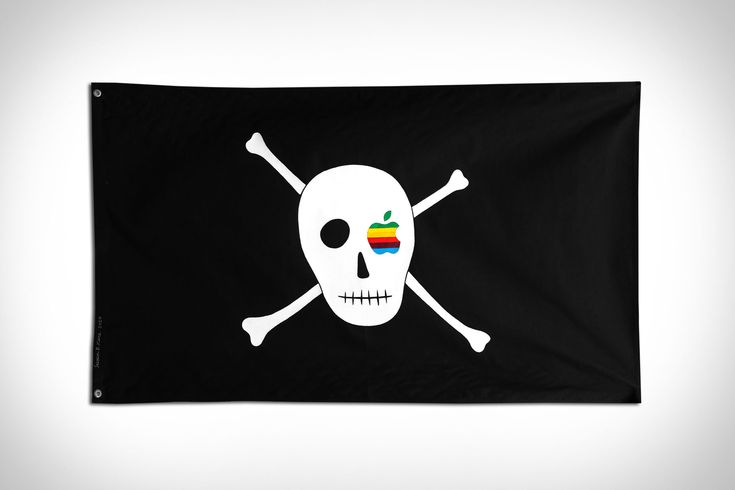
Jobs did not just want the Macintosh to succeed; he wanted it to publicly humiliate the Lisa. He hoisted a pirate flag over his team's building and initiated a vicious, internal civil war. He demanded that the Macintosh possess the same graphical magic as the Lisa, but at a fraction of the cost.
When the Macintosh launched a year later in 1984, priced at a relatively accessible $2,495, it was an immediate cultural phenomenon. It was sleek, it was fast, and it possessed a raw, undeniable charisma. But more importantly, it instantly rendered the Lisa obsolete. Why would any rational consumer spend ten thousand dollars on a machine when Apple itself was selling a superior, cooler alternative for a quarter of the price?
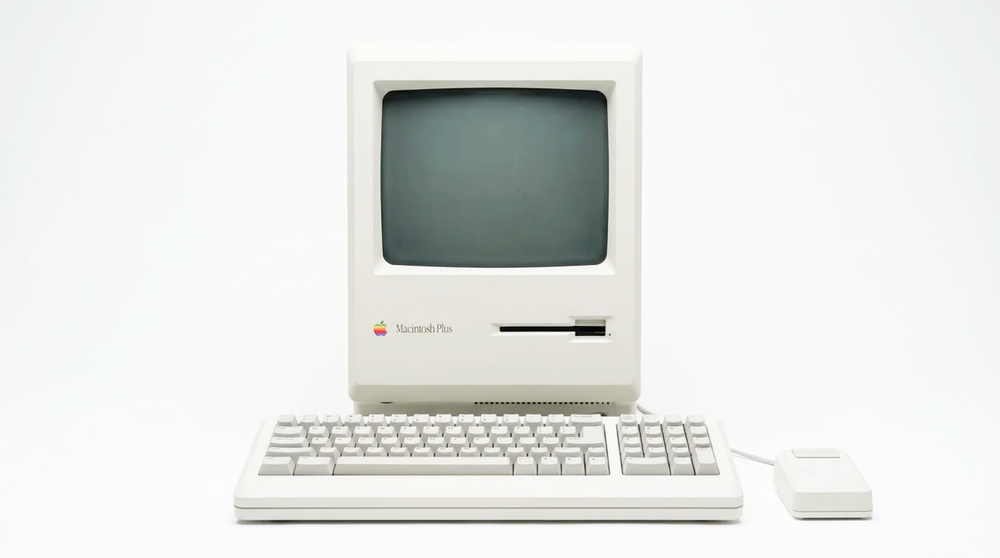
Apple had successfully cannibalized its own flagship product. The Lisa was dead on arrival, but the physical bodies of the machines remained. By the late 1980s, Apple was sitting on thousands of unsold units. They tried rebranding it as the Macintosh XL. They tried slashing the price. Nothing worked. The warehouses were choked with obsolete, unsellable hardware, and the accounting department was looking at a massive, unmitigated disaster on their ledgers.
The False Resurrection
This is where the story usually fades into corporate obscurity, but the truth of the Lisa involves a final, ruthless twist of the financial knife.
Enter Bob Cook, a scrappy entrepreneur who ran a third-party vendor called Sun Remarketing. Cook saw an opportunity in the wreckage. He approached Apple with a simple, mutually beneficial proposition: sell him the dead inventory at a massive discount, and he would package the Lisa machines with updated software, selling them to niche markets and educational institutions that couldn't afford brand-new hardware.
For a brief, shining moment, it seemed like a rational solution. Apple agreed, and Sun Remarketing took possession of the remaining Lisa stock. Cook and his team actually began to move the hardware. They wrote new software called MacWorks, which allowed the Lisa to run Macintosh programs smoothly. They were resurrecting the dead, turning a corporate embarrassment into a functional, revenue-generating asset.
But Bob Cook underestimated the cold, absolute calculus of the United States tax code.
Back in Cupertino, the finance executives at Apple were running the numbers. The company was still carrying the Lisa inventory on its books at an artificially high valuation. If they allowed Sun Remarketing to slowly bleed the inventory into the market at cut-rate prices, Apple would have to recognize the massive financial loss over a prolonged period, angering Wall Street and damaging the stock price.
However, the accountants found a loophole. If Apple could prove to the Internal Revenue Service that the Lisa inventory was completely, physically destroyed — rendering its value to absolute zero — the company could claim a massive, immediate tax write-off. The deduction was worth significantly more in raw capital than whatever pennies Sun Remarketing was paying them for the hardware.
The decision was entirely devoid of sentimentality. It was a pure, bloodless financial execution. Apple abruptly invoked a clause in their contract, demanding that Sun Remarketing cease all sales immediately and return the remaining thousands of Lisa computers to corporate custody.
They were not taking the machines back to sell them. They were taking them back to kill.
The Execution in Logan
In September of 1989, the final act of the tragedy played out in a dusty, windswept municipal landfill in Logan, Utah.

Apple did not want a public spectacle. They contracted a private security firm and hired a fleet of heavy transport trucks to quietly move the remaining inventory — roughly two thousand, seven hundred pristine Lisa computers — from local storage facilities out into the remote Utah desert.
The scene was surreal, possessing the grim, mechanical efficiency of a mafia hit. The trucks backed up to a massive, freshly dug pit in the landfill. Workers began offloading the computers, tossing them into the dirt. These were machines that, just a few years prior, had been heralded as the absolute pinnacle of human engineering. They contained perfectly functional motherboards, heavy cathode-ray tube monitors, and the exact same mouse technology that would eventually define the entire modern computing era.
But the federal government requires proof of death. To claim the tax write-off, Apple could not simply throw the machines away; they had to guarantee that scavengers could never retrieve and resell the parts.
Representatives from Apple stood on the edge of the pit, alongside highly skeptical auditors from the IRS. They watched as the landfill operators fired up massive, diesel-choked bulldozers. The heavy Caterpillar treads rolled forward, dropping over the edge of the pit.
The sound was reportedly sickening. It was the sharp, violent crack of heavy beige plastic shattering under tons of industrial steel. Monitors imploded with a hollow pop as the vacuum tubes collapsed. Glass shattered, and delicate, hand-soldered circuit boards were ground into sharp, useless fragments of green fiberglass and copper.
The bulldozers drove back and forth over the pile until the $50 million investment was reduced to a flattened, unrecognizable layer of synthetic rubble. Once the IRS agents were satisfied that the technology was thoroughly annihilated, the operators pushed tons of heavy Utah topsoil over the wreckage, burying the greatest financial disaster in Apple history under the earth.
The Architecture of Forgetting
When we look back at the corporate history of the technology industry, we are trained to worship the timeline of success. We memorize the keynotes, the brilliant marketing campaigns, and the ascending stock charts. But the Utah boneyard remains one of the most vital, sobering artifacts in modern business history.
It proves that corporate arrogance has a physical weight. The Lisa did not fail because the engineers lacked vision; it failed because the executives driving the company lacked basic human humility. They built a monument to their own ego, entirely ignoring the reality of the market, and when that reality inevitably crushed them, they used the tax code to hide the evidence of their crime in the dirt.
Accounting is a blood sport, and the burial of the Lisa is a stark reminder that the men who run the world’s most powerful brands are not infallible wizards. They are flawed, desperate protagonists who are entirely capable of building a ten-thousand-dollar mistake, looking at the damage they have caused, and deciding that the most profitable course of action is to simply fire up the bulldozers and bury their shame. ~
Sources
- Brennan-Jobs, Lisa. Small Fry: A Memoir. New York: Grove Press, 2018.
- Isaacson, Walter. Steve Jobs. New York: Simon & Schuster, 2011.
- Esslinger, H. Keep It Simple: The Early Design Years of Apple. Stuttgart: Arnoldsche Art Publishers, 2014.
- Segall, K. Insanely Simple: The Obsession That Drives Apple's Success. New York: Portfolio / Penguin, 2012.
- Lashinsky, A. Inside Apple: How America's Most Admired—and Secretive—Company Really Works. New York: Business Plus / Grand Central Publishing, 2012.