


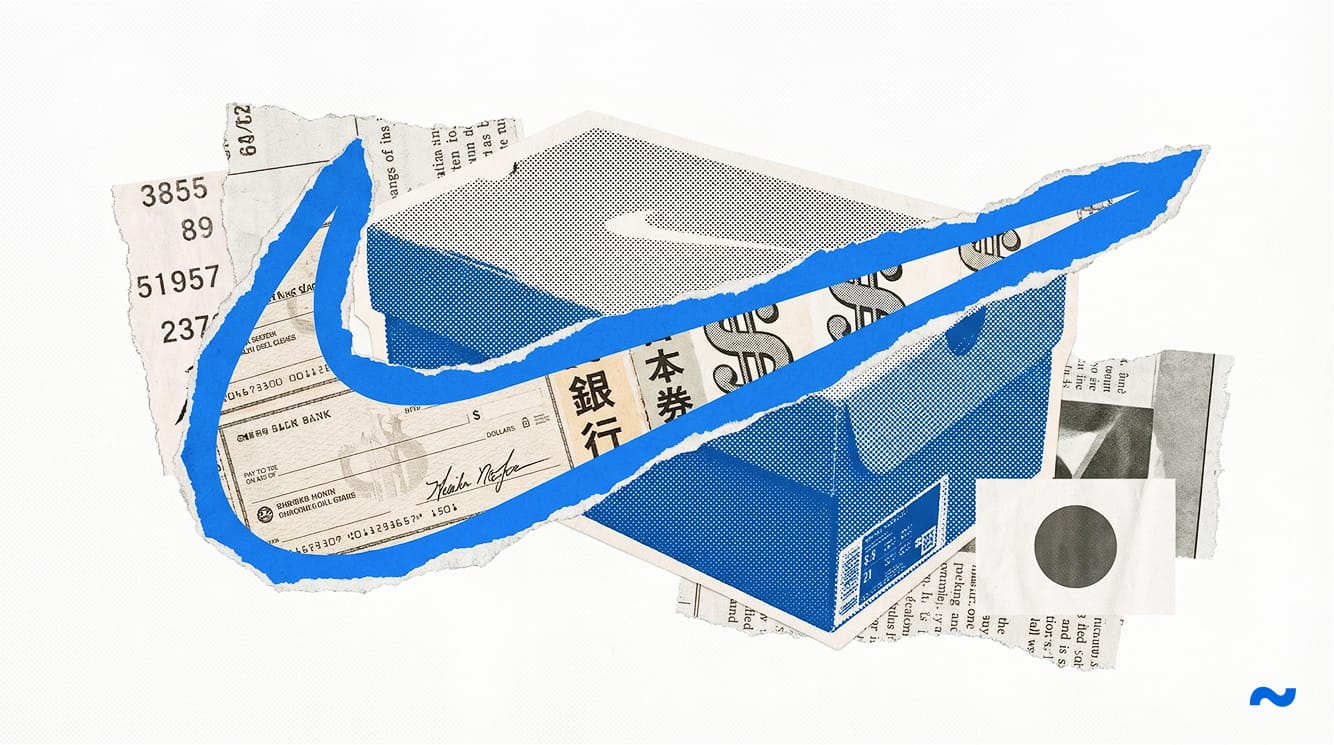
I spent a miserable time buried in the financial autopsy reports of the mid-1970s Pacific Northwest banking sector, tracing the faded, panicked ledger entries and the endorsed backs of canceled checks. The glossy corporate myth of the modern sportswear empire is built on the sanitized idea of relentless innovation and marketing genius. But if you strip away the high-definition advertising and dig your nails into the raw, unedited accounting logs from 1975, you find a much colder reality. It was cemented by federal financial fraud.
In the spring of that year, the Oregon-based shoe company was experiencing the kind of catastrophic success that routinely destroys small businesses. They were doubling their sales annually, moving massive quantities of athletic footwear imported from Asian factories. But in the ruthless, unforgiving mathematics of international trade, hyper-growth is often a delayed death sentence. To keep the overseas assembly lines humming, the company had to bleed cash to pay for inventory months before the shoes ever hit American retail shelves. They were starving for liquidity, suffocating under the crushing weight of their own aggressive expansion.
To bridge the massive, yawning chasm between paying the factories and collecting revenue from local sporting goods stores, Phil Knight and his inner circle resorted to a desperately illegal tactic. They began "riding the float."
Tracing the routed check numbers across the scratched glass of old banking microfiche, the mechanics of the scheme become chillingly clear. The local executives opened multiple accounts across a web of different regional banks. They would stroke a massive check from a completely empty account at one institution to seamlessly cover an impending, catastrophic overdraft at another. They were entirely, hopelessly reliant on the agonizingly slow, pre-digital processing times of the 1970s banking system, where it took days for a piece of paper to physically clear across state lines. For those few, desperate days, the money existed in two places at once — a phantom currency conjured entirely out of thin air to keep the warehouse lights on.
It was a classic check-kiting scheme. It was highly illegal. And for months, it was the only thing keeping the brand alive.
The Guillotine Drops
You can only outrun the math for so long before the system inevitably catches up. The execution occurred on a quiet Friday afternoon.
Reading through the heavily redacted internal communications of the Bank of California, the shift in institutional tone is abrupt and violently absolute. The bank’s auditors finally noticed the unnatural, frantic velocity of cash moving between the corporate accounts. They recognized the unmistakable pattern of the float. They realized the millions of dollars flowing through their branch were backed by nothing but empty air and sheer desperation.
The bank did not issue a polite warning over a business lunch. They dropped the guillotine.
Without warning, the Bank of California froze all of the company's assets. They stopped honoring the incoming checks, locked the vault, padlocked the accounts, and, according to several historical accounts, quietly notified the Federal Bureau of Investigation of a suspected multi-million dollar fraud operation. The panic inside the Oregon headquarters must have been absolute, a cold sweat breaking across the boardroom. The founder was not just facing the immediate, humiliating bankruptcy of his life’s work; he was staring down the barrel of a federal prison sentence. With the accounts frozen, payroll checks were going to violently bounce by Monday morning. The Asian factories would immediately halt production. The company was legally and financially dead, its corpse left to cool over the weekend.
They had exactly forty-eight hours to find an impossibly large sum of cash to plug the black hole in their ledgers. Failure meant the American justice system was going to dismantle them piece by bleeding piece.
The Auditors from Osaka
There was only one entity on the board with the raw capital necessary to stop the bleeding: Nissho Iwai.