


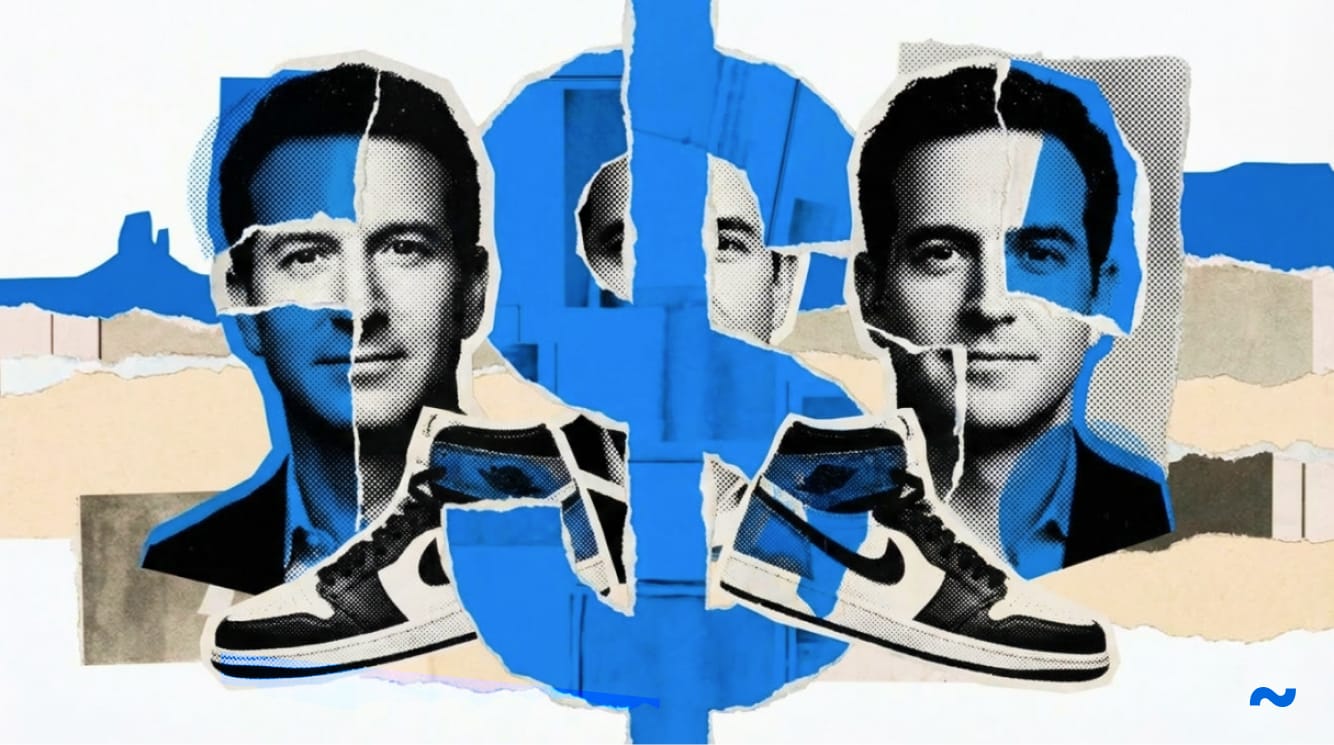
Staring at the continuous-feed dot-matrix printouts of the 1984 regional distribution logs, my eyes began to violently blur. I was hunting for the exact, bleeding moment the athletic apparel industry stopped selling utility and started selling pure, uncut psychological addiction. We are heavily conditioned to view the modern sneaker market — a multi-billion-dollar circus of limited-edition drops, rigged digital lotteries, and frantic, bloodthirsty secondary markets — as a brilliant, meticulously engineered strategy devised by corporate masterminds sitting high in air-conditioned glass towers.
The carbon-copied ledgers resting heavy on my scratched desk told a completely different, deeply cynical story. The architectural blueprint for modern streetwear was not carefully drafted in a sterile boardroom. It was violently, desperately forced into existence by three sweating storefront owners trying to outrun bankruptcy.
To understand the sheer, breathtaking arrogance of the sportswear giants in the early 1980s, you have to examine their rigid, completely unfeeling product lifecycles. When Nike unleashed the Air Force 1 in 1982, it was a technological marvel, the first basketball shoe to feature a pressurized pocket of gas buried deep in the heavy rubber heel. It sold remarkably well. But in the sterile, bureaucratic machinery of Beaverton, Oregon, commercial success did not buy a product immortality. The apparel industry operated on a strict, predetermined, entirely unforgiving calendar. You introduce a silhouette, you heavily market it, you sell it for twelve months, and then you quietly, efficiently execute it in the dark to make room for the next iteration.
Reading the internal product retirement memos from 1983, running my finger over the fading type, the coldness of the corporate decision is absolute. The executives did not care that the heavy leather shoe was gaining ferocious, undeniable traction on the cracked asphalt courts of the East Coast. Their internal calendar rigidly dictated it was time for the model to die. The factory lines in Asia were abruptly, permanently retooled. The trans-Pacific supply line was severed. The Air Force 1 was officially discontinued, slated to become nothing more than a forgotten, rotting piece of outdated performance gear.
They actively suffocated their own golden goose simply because the manual told them to do it.
The East Coast Guillotine
While the Oregon executives were busily drawing up clean, geometric schematics for the next fiscal year, the gritty reality on the ground was violently collapsing. When the corporate guillotine dropped on the Air Force 1, the impact was not felt in pristine, suburban sporting goods stores. It was felt entirely in the concrete, suffocating arteries of Baltimore.
In that specific, hyper-dense geographic pocket, the shoe had mutated from a simple piece of athletic equipment into a mandatory, non-negotiable street-level uniform. It was an unmistakable, heavy status symbol. The thick white leather, the towering sole, the bold, aggressive swoosh — it was the prevailing aesthetic language of the block. When the supply suddenly, inexplicably dried up, local merchants were caught completely blind. They had desperate customers walking through their glass doors with fistfuls of crumpled cash, aggressively demanding a product that officially no longer existed.
I mapped out the regional sales density from that quarter, the data forming a bleak picture, and the financial hemorrhage is staggering. Independent retailers were actively turning away thousands of dollars a week. In a razor-thin retail environment, watching guaranteed cash walk out your front door because your supplier is stubbornly adhering to a corporate calendar is not just frustrating.
It is a fatal, bleeding threat to your survival.
The Hostage Negotiation
Three independent Baltimore merchants recognized they were staring at a massive, untapped goldmine that the manufacturer had stupidly, blindly buried in the dirt. The owners of Cinderella Shoes, Charley Rudo Sports, and Downtown Locker Room were not polished global executives with golden parachutes. They were street-level, blue-collar operators who lived and died by the daily ring of their cash registers.
Realizing their regional sales representatives were completely powerless against the labyrinthine Beaverton bureaucracy, the three men bypassed the chain of command entirely. They pooled their meager leverage and essentially initiated a hostile, desperate hostage negotiation with the corporate brass. They demanded the massive sportswear giant spin the Asian assembly lines back up and bring the dead silhouette back to life.
The executives laughed. The entire premise was absurd. The churning machinery of a multinational corporation does not run backward for three rogue, insignificant shops in Maryland. The heavy steel tooling had been changed. The marketing budget had aggressively moved on. Reversing course violently violated every established law of their planned obsolescence strategy.
But the Baltimore syndicate refused to drop the issue. To get rid of them, the Oregon brass threw down a financial hurdle designed to be completely, impossibly lethal. They told the merchants they would only authorize a localized production run if the three independent shops fronted the raw cash to purchase a massive minimum order.
Twelve thousand pairs.
In 1984, for three standalone, brick-and-mortar storefronts, demanding they absorb the upfront cost of twelve thousand units of a single, discontinued shoe was a financial suicide pact. It was a quarter of a million dollars in dead, highly radioactive inventory risk. The executives issued the ultimatum fully expecting the pesky merchants to hang up the phone, swallow their pride, and quietly disappear into the night.
The Twelve Thousand Pair Suicide Pact
They did not hang up. They pooled their capital, mortgaged their storefronts, and brutally called the bluff.
It remains one of the most audacious, desperate gambles in retail history. Three guys in Baltimore forced a global monolith to bend to their will through sheer, unadulterated, sweat-soaked financial nerve.
When the massive shipment of resurrected shoes finally hit the loading docks in Maryland, smelling of fresh rubber and factory glue, the product did not sit on the shelves. It instantly evaporated. The pent-up street demand, starving from the manufacturer's artificial drought, consumed the twelve thousand pairs with a violent, terrifying velocity.
Realizing they had accidentally plunged a drill into a bottomless well of consumer desire, the syndicate doubled down. They approached the manufacturer again, this time aggressively dictating the terms. They launched the "Color of the Month" club. Every thirty days, the three Baltimore shops would receive a brand new, entirely exclusive colorway of the Air Force 1. You could not get these variants in Los Angeles. You could not buy them in Chicago. You could only get them by walking through the physical front doors of those specific three stores.
This localized, iron-fisted monopoly ignited an absolute frenzy. I read through contemporary, breathless accounts of kids from New York City and Philadelphia piling into beat-up cars and driving hours down Interstate 95 just to buy a pair of shoes before they completely vanished. The merchants had accidentally weaponized geography and timing. By dripping out a single, exclusive variant at a time, they hardwired a vicious cycle of frantic hoarding directly into the consumer base.
They did not just save their storefronts. They inadvertently invented the predatory mechanics of artificial scarcity.
The Empire Co-Opts the Rebellion
Back in Oregon, the corporate accountants watched the isolated, inexplicable explosion of revenue emanating from a single mid-Atlantic city and realized their entire, carefully crafted business model was completely wrong.
The corporate brass had always firmly believed that maximum profit inherently required maximum distribution. Flood the market, saturate every neon-lit mall in America, and extract every possible dollar. But the Baltimore syndicate proved that aggressively restricting supply actually increased the perceived, feverish value of the product. By prematurely pulling the Air Force 1 from the market, the sportswear giant had accidentally created a panic. By strictly limiting the "Color of the Month" releases to three stores, the street-level retailers had turned a piece of stitched leather into a rare, coveted artifact.
The global brand quietly observed this street-level extortion from their glass towers and entirely, ruthlessly co-opted the blueprint. They realized that you do not need to constantly invent new technology to drive massive revenue.
You simply need to manufacture consumer desperation.
They took the brutal, highly effective survival tactics of three independent shop owners and scaled them globally. The "drop" was born. Limit the production run to a microscopic fraction of the actual demand. Heavily promote the release. Watch the consumer base tear itself apart trying to acquire the asset, and then immediately, coldly pull the product away to ensure the hunger never actually subsides.
The entire modern hype economy is built on a fragile foundation of historical amnesia. Today, millions of people set alarms on their phones, enter rigged digital lotteries, and pay exorbitant markups to secondary resellers, fully convinced they are participating in an exclusive, highly curated global culture. We wear the limited-edition releases as badges of honor, proud to have navigated the complex, unforgiving maze of the street fashion ecosystem.
But stripped of the glossy marketing campaigns and the billion-dollar celebrity endorsements, the truth is deeply humiliating. We are not participating in a culture. We are reacting to a psychological trigger. The multi-billion-dollar scarcity machine that dictates what we wear and exactly how much we bleed to get it is nothing more than a polished, weaponized version of an accident — a cycle of manufactured panic accidentally discovered by three panicked guys in Baltimore who just needed to keep their lights on. ~
BrandAnatomy operates independently. You can anonymously fund future forensic deep-dives.
Sources
- García, B. (2015). Out of the Box: The Rise of Sneaker Culture. Skira Rizzoli.
- Strasser, J., & Becklund, L. (1991). Swoosh: The Unauthorized Story of Nike and the Men Who Played There. Harcourt Brace Jovanovich.